When you think about workplace safety, you likely picture hard hats, high-visibility jackets, and sturdy safety boots – and if you are one of our customers, you know we have plenty of all of them! PPE is critical, but there's another layer of protection that is just as essential: safety signs.
Safety signs communicate information instantly and effectively to prevent accidents before they have a chance to occur.
The Legal and Practical Importance of Signs
In the UK, the use of safety signs is a legal requirement under the Health and Safety (Safety Signs and Signals) Regulations 1996. This legislation mandates that employers use safety signs to warn of a hazard or to give a safety instruction where the risk cannot be eliminated or controlled by other means.
Beyond legal compliance, a clearly marked environment:
- Reduces Accidents
By highlighting potential dangers like a "wet floor" or "high voltage", signs provide a clear, visual warning to employees and visitors, allowing them to take the necessary precautions. - Helps Ensure Correct Behaviour
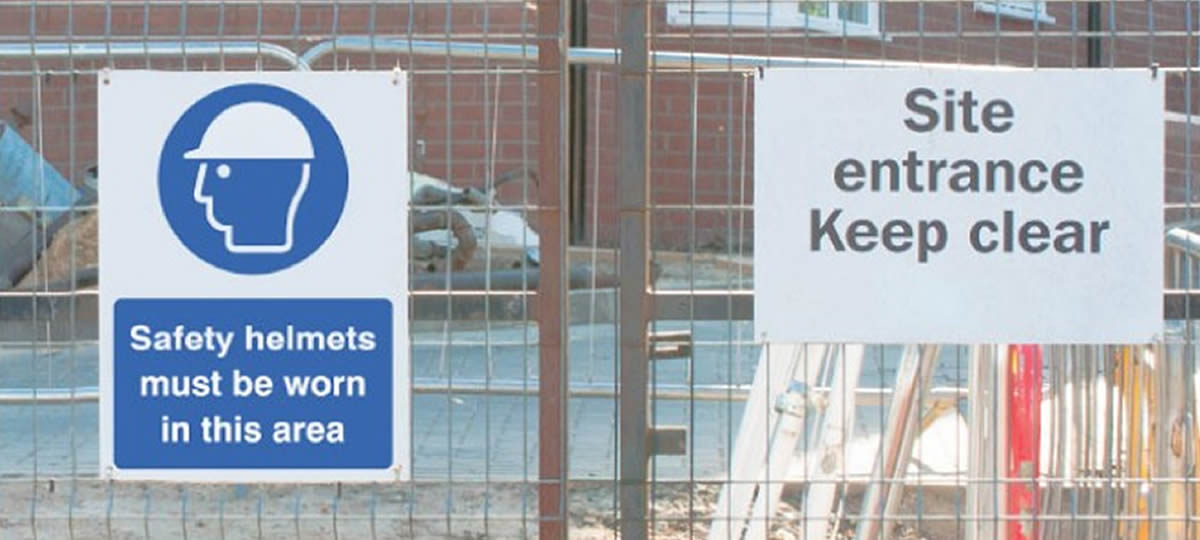
Mandatory signs, such as "Foot Protection Must Be Worn," remind staff to follow specific safety protocols in designated areas, reinforcing your safety culture. - Guides in Emergencies
In a crisis, such as a fire, clearly marked fire exits, assembly points, and first aid locations are vital for a swift and safe response. They remove ambiguity during a high-stress situation.
The Universal Language of Signs
Safety signs follow a universal standard, making their message easy to understand regardless of language. They are categorised by their shape and colour:
- Warning Signs (Yellow Triangle)
These alert you to a nearby hazard or danger. Examples include "Caution: Forklift Trucks" or "Slippery Surface." - Mandatory Signs (Blue Circle)
These require a specific action to be taken. For instance, "Eye Protection Must Be Worn". - Prohibition Signs (Red Circle with a Line)
These indicate an action that is not allowed. A recognisable example is the "No Smoking" sign. - Fire Safety Signs (Red Square)
These are used to mark the location of fire-fighting equipment. Examples include "Fire Extinguisher" or "Fire Alarm." - Emergency Escape and First Aid Signs (Green Square)
These guide people to a safe location or emergency equipment. Look for "Fire Exit" or "First Aid Kit" signs in this category.
On the Workline Safety Signs website, you’ll find a range of clear, compliant, and durable signs that will help to protect your people and your business.